Exploring Traditional Knowledge in Palm Sap Processing in Tanjung Rambutan Village, Kampar, Indonesia
Keywords:
palm sap, ethnoscience, ethnomedicine, arenga pinnata, sustainable agricultureAbstract
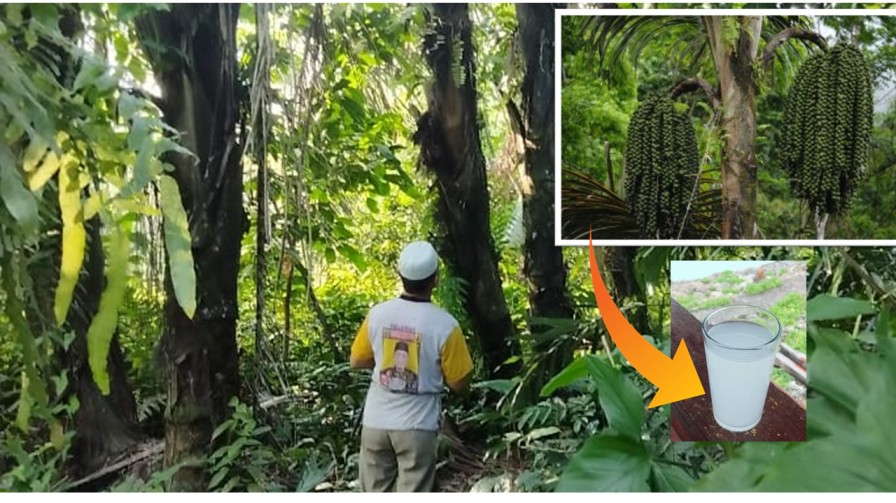
Palm sap (Arenga pinnata), a multifunctional plant product, plays an important role in the nutrition, health, and economy of rural communities in Indonesia. In Tanjung Rambutan Village, Kampar Regency, local knowledge governs the collection, processing, and preservation of sap, yet systematic documentation of these practices and their scientific implications remains limited. This study aimed to investigate traditional palm sap processing methods, assess their quality, analyse the underlying biochemical and microbial mechanisms, and explore potential applications in ethnoscience education. A qualitative descriptive case study was conducted involving in-depth interviews, direct field observations, and market surveys with three experienced sap producers. Data were analysed using an interactive qualitative model, including data collection, reduction, display, and synthesis, to link traditional practices with scientific principles. The results indicate that sap collection from mature male flower stalks, twice-daily tapping, immediate processing, and the use of smoked bamboo containers effectively preserve sap clarity, sugar content, and bioactive compounds. Natural preservation using mangosteen leaves reduces microbial contamination and delays fermentation into alcohol. Boiling sap for several hours without additives further enhances shelf life while maintaining nutritional and medicinal properties. These practices demonstrate sophisticated empirical understanding of microbial control, fermentation dynamics, and chemical preservation embedded within cultural traditions. The economic and social significance of sap production reinforces the value of preserving indigenous knowledge while providing opportunities for contextualised science education. This study highlights the alignment between traditional practices and scientific principles, offering a model for integrating ethnomedicinal knowledge into sustainable resource management, community livelihoods, and pedagogical frameworks. Future research may explore quantitative evaluation of microbial activity, bioactive compound stability, and scalable applications for broader educational and commercial use. The findings underscore the importance of documenting and validating indigenous practices to support sustainability, cultural preservation, and scientific learning